
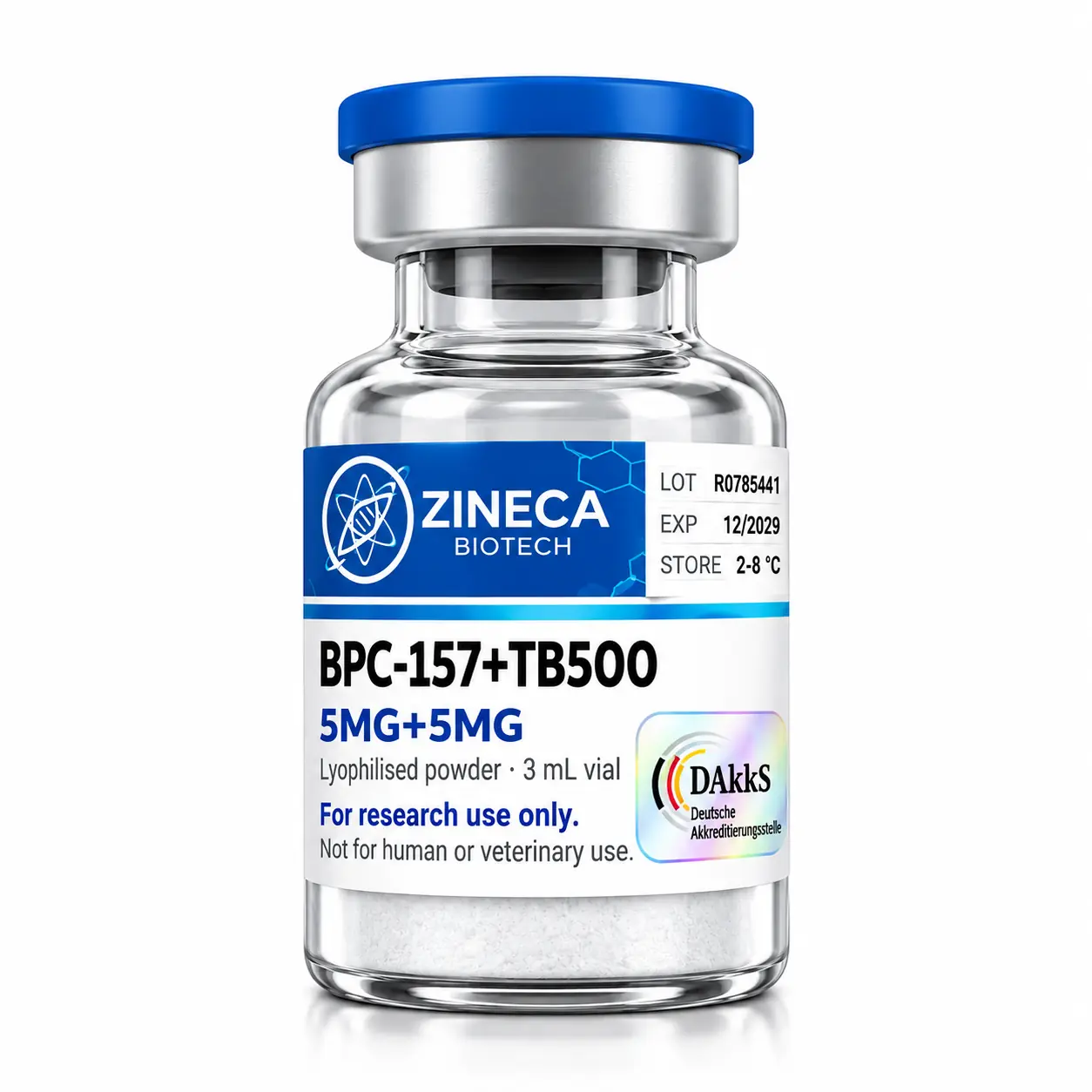
Related products

L-Carnitine 10ml
L-Carnitine 10ml
L-Carnitine is a naturally occurring small molecule supplied in liquid format for laboratory and analytical research applications. Commonly utilised within metabolic and mitochondrial research environments, L-Carnitine is widely studied for its involvement in cellular energy metabolism and fatty acid transport mechanisms.
This product is intended strictly for controlled scientific and laboratory workflows involving metabolic pathway investigation, mitochondrial function analysis and biochemical transport studies.
Product Details
- Product Name: L-Carnitine
- Synonyms: Levocarnitine, (R)-3-hydroxy-4-(trimethylazaniumyl)butanoate
- CAS Number: 541-15-1
- Molecular Formula: C7H15NO3
- Molecular Weight: 161.20 g/mol
- Chemical Classification: Naturally occurring quaternary ammonium compound
- Purity: ≥ 99% chemical purity typical
- Appearance: Clear liquid
- Pack Size: 10ml
- Solubility: Water soluble
- Storage: Store in a cool dark place. Discard 30 days after opening
Description & Research Context
In biochemical and cellular research systems, L-Carnitine functions as a carrier molecule involved in the transport of long-chain fatty acids across the inner mitochondrial membrane through the carnitine shuttle mechanism.
Experimental research commonly examines the role of L-Carnitine in reversible esterification reactions with acyl-CoA derivatives, forming acylcarnitines that are transported into the mitochondrial matrix for β-oxidation. These mechanisms are central to studies involving cellular energy metabolism, mitochondrial function and lipid-handling pathways under controlled laboratory conditions.
Due to its well-characterised biochemical profile and stability, L-Carnitine is widely utilised as a reference compound within metabolic and transporter research applications.
Applications in Research
- Study of mitochondrial fatty acid transport mechanisms
- Investigation of cellular energy metabolism and β-oxidation pathways
- Use as a reference compound in metabolic and enzymatic assays
- Research into transporter interactions and acylcarnitine formation
- In vitro and ex vivo studies involving mitochondrial function analysis
Handling & Stability
- Store in a cool dark place away from direct light exposure
- Discard 30 days after opening
- Shelf life: 36 months from production when stored correctly
- Inspect liquid prior to laboratory use for clarity and consistency
Precautions & Notes
Experimental behaviour of L-Carnitine may vary depending on concentration, assay conditions, cellular model and metabolic state. Buffer composition, ionic strength and pH may influence transport activity and binding interactions during experimental procedures.
Appropriate laboratory controls are recommended to distinguish specific metabolic responses from non-specific osmotic or ionic effects.
Research Use Only
This product is supplied strictly for laboratory, analytical and scientific research purposes only. It is not intended for human consumption, veterinary use, therapeutic use, diagnostic use, medical use, cosmetic use, food use or recreational use.
MOTS-c 10mg
MOTS-c 10mg
MOTS-c is a synthetic mitochondrial-derived peptide supplied in lyophilised powder format for laboratory and analytical research applications. It is commonly utilised within controlled research environments investigating mitochondrial signalling, metabolic regulation and intracellular communication pathways.
This peptide is studied in biochemical and cellular research systems focused on energy metabolism, adaptive stress signalling and mitochondrial–nuclear interactions under controlled laboratory conditions.
Product Details
- Product Name: MOTS-c
- Synonyms: Mitochondrial ORF of the Twelve S rRNA-c
- CAS Number: 1627580-64-6
- Molecular Formula: C101H152N28O22S2
- Molecular Weight: ~2174.64 g/mol
- Peptide Length: 16 amino acids
- Peptide Type: Mitochondrial-derived regulatory peptide
- Purity: ≥ 99% HPLC typical
- Appearance: White to off-white lyophilised powder
- Pack Size: 10mg
- Storage: Desiccated, protected from light, stored at –20°C or below
- Solubility: Soluble in water and buffered aqueous solutions
Description & Research Context
MOTS-c corresponds to a naturally occurring mitochondrial-derived peptide encoded within the mitochondrial 12S rRNA region. In research environments, it is commonly utilised to investigate mitochondrial signalling pathways, metabolic regulation mechanisms and nuclear–mitochondrial communication.
Experimental models have examined the influence of MOTS-c on intracellular signalling pathways associated with energy sensing, insulin signalling and adaptive cellular stress responses. Research applications frequently focus on AMPK activation, metabolic gene expression and peptide-mediated stress signalling under controlled laboratory conditions.
Observed molecular responses may vary depending on peptide concentration, exposure duration, metabolic state and experimental model design.
Applications in Research
- Study of mitochondrial-derived peptide signalling pathways
- Investigation of metabolic regulation and energy homeostasis mechanisms
- In vitro analysis of mitochondrial–nuclear communication
- Research into AMPK activation and metabolic gene expression
- Use as a reference compound in mitochondrial biology and metabolism research
Handling, Reconstitution & Stability
- Weigh under dry laboratory conditions, as peptides may be hygroscopic
- Reconstitute using sterile water or appropriate buffered aqueous solutions
- Avoid vigorous agitation during dissolution
- Filter sterilise if required prior to laboratory use
- Aliquot and store reconstituted solutions at –20°C or lower
- Avoid repeated freeze-thaw cycles
Precautions & Notes
Experimental behaviour of MOTS-c may vary depending on metabolic state, cellular model, peptide concentration and exposure duration. Buffer composition, pH and ionic strength may influence peptide stability and assay performance during laboratory procedures.
Appropriate laboratory controls are recommended to distinguish peptide-specific signalling activity from non-specific experimental effects.
Research Use Only
This product is supplied strictly for laboratory, analytical and scientific research purposes only. It is not intended for human consumption, veterinary use, therapeutic use, diagnostic use, medical use, cosmetic use, food use or recreational use.
Selank 5mg
Selank 5mg
Selank is a synthetic neuropeptide analogue supplied in lyophilised powder format for laboratory and analytical research applications. Derived from the endogenous peptide tuftsin, Selank is commonly utilised within controlled research environments investigating neuropeptide signalling, neuroimmune interactions and central nervous system regulatory pathways.
This peptide is widely studied in biochemical and cellular research systems examining neurotransmitter-associated signalling, stress-response pathways and peptide-mediated communication mechanisms under controlled laboratory conditions.
Product Details
- Product Name: Selank
- Synonyms: Thr–Lys–Pro–Arg–Pro–Gly–Pro
- CAS Number: 129954-34-3
- Molecular Formula: C33H57N11O9
- Molecular Weight: ~751.9 g/mol
- Peptide Length: 7 amino acids
- Peptide Type: Synthetic neuropeptide analogue
- Purity: ≥ 99% HPLC typical
- Appearance: White to off-white lyophilised powder
- Pack Size: 5mg
- Storage: Desiccated, protected from light, stored at –20°C or below
- Solubility: Soluble in water and buffered aqueous solutions
Description & Research Context
Selank is a synthetic heptapeptide developed from the endogenous immunomodulatory peptide tuftsin and modified to enhance peptide stability for experimental investigation. In laboratory research environments, it is commonly utilised to study neuropeptide-mediated signalling pathways and neuroimmune communication mechanisms.
Experimental research systems have examined Selank for its influence on neuronal signalling pathways, including neurotransmitter-associated signalling cascades and stress-response mechanisms. Studies commonly investigate peptide–receptor interactions, intracellular signalling, neuroimmune regulation and gene-expression responses under controlled laboratory conditions.
Observed molecular responses may vary depending on peptide concentration, exposure duration, neuronal model and experimental system design.
Applications in Research
- Study of neuropeptide-mediated signalling pathways
- Investigation of neuroimmune interactions and CNS regulatory mechanisms
- In vitro and in vivo analysis of peptide stability and signalling behaviour
- Research into neurotransmitter-associated signalling systems
- Use as a reference compound in neurobiology and peptide-signalling research
Handling, Reconstitution & Stability
- Weigh under dry laboratory conditions, as peptides may be hygroscopic
- Reconstitute using sterile water or suitable buffered aqueous solutions
- Avoid vigorous agitation during dissolution
- Filter sterilise if required prior to laboratory use
- Aliquot and store reconstituted solutions at –20°C or lower
- Avoid repeated freeze-thaw cycles
Precautions & Notes
Experimental behaviour of Selank may vary depending on neuronal model, receptor expression, peptide concentration and exposure duration. Buffer composition, pH and ionic strength may influence peptide stability and assay performance during laboratory procedures.
Appropriate laboratory controls are recommended to distinguish peptide-specific signalling activity from non-specific experimental effects.
Research Use Only
This product is supplied strictly for laboratory, analytical and scientific research purposes only. It is not intended for human consumption, veterinary use, therapeutic use, diagnostic use, medical use, cosmetic use, food use or recreational use.