
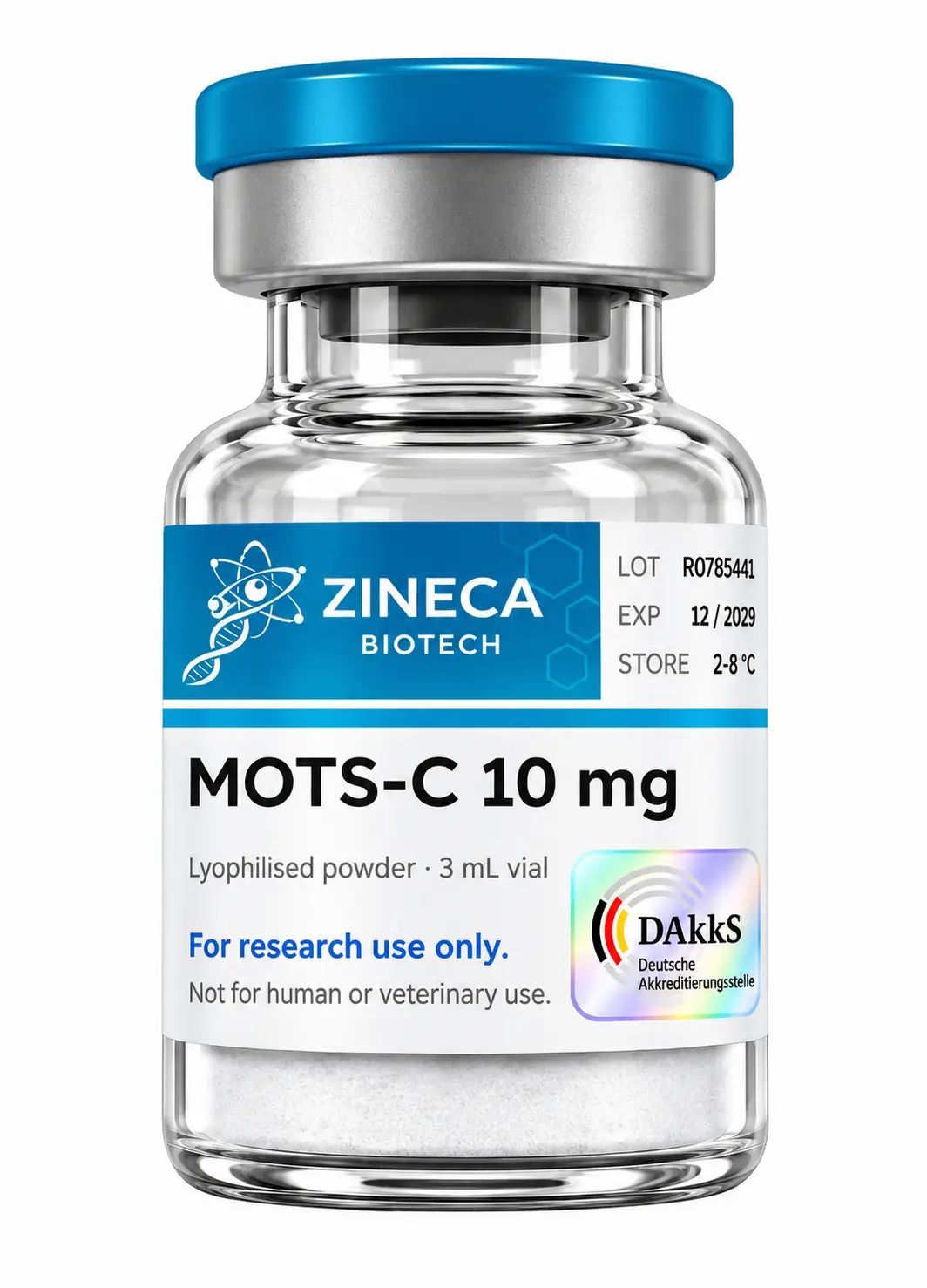
Related products
CJC-1295 500mg
CJC-1295 500mg
CJC-1295 is a synthetic peptide supplied in lyophilised powder format for laboratory and analytical research applications. This product is presented within Zineca’s clean research-focused product range and is intended strictly for controlled scientific handling procedures.
Manufactured for research workflows, this peptide is commonly utilised within receptor-signalling, peptide stability and endocrine-pathway investigation models in laboratory environments. The supplied vial format supports structured storage, handling and batch-based research organisation.
Product Details
- Product Name: CJC-1295
- Strength: 500mg
- Format: Lyophilised powder
- Appearance: White to off-white powder
- Intended Use: Laboratory research only
- Storage: Store refrigerated or frozen in suitable laboratory conditions
- Packaging: Securely packed research vial
Research Use Only
This product is supplied strictly for laboratory, analytical and scientific research purposes only. It is not intended for human consumption, veterinary use, medical use, therapeutic application, cosmetic use or diagnostic procedures.
Packaging & Fulfilment
Each order is packed carefully using discreet external packaging and processed through a UK-focused fulfilment workflow. Batch-focused presentation areas and COA integration sections can be used within your Elementor product layout where required.
Important Notice
By purchasing this product, the buyer confirms the item is being obtained solely for legitimate laboratory research purposes and will not be used outside applicable handling and research regulations.
Ipamorelin 5mg
Ipamorelin 5mg
Ipamorelin is a synthetic pentapeptide supplied in lyophilised powder format for laboratory, analytical and peptide-signalling research applications. It is commonly referenced in controlled research settings as a selective growth hormone secretagogue and ghrelin receptor agonist.
This product is intended for professional research workflows involving receptor-binding studies, peptide stability review, endocrine-pathway investigation and comparative analysis with other growth hormone releasing peptide compounds.
Product Details
- Product Name: Ipamorelin
- Synonyms: Ipamorelin Acetate, NNC 26-0161, Ipamorelin pentapeptide
- CAS Number: 170851-70-4
- Molecular Formula: C38H49N9O5
- Molecular Weight: ~711.85 g/mol
- Peptide Sequence: Aib-His-D-2-Nal-D-Phe-Lys-NH2
- Classification: Synthetic growth hormone secretagogue; selective ghrelin receptor agonist
- Purity: ≥ 99% HPLC typical
- Appearance: White to off-white lyophilised powder
- Pack Size: 5mg
- Storage: Desiccated, protected from light, stored at –20°C
- Solubility: Soluble in sterile water and buffered aqueous solutions
Description & Research Context
Ipamorelin was developed through structural optimisation of earlier growth hormone releasing peptide compounds. In biochemical and cellular research systems, it is studied for its activity at the ghrelin/growth hormone secretagogue receptor, also known as GHSR-1a.
Compared with earlier GHRP compounds such as GHRP-2 and GHRP-6, Ipamorelin is valued in research for its more selective profile. Experimental studies have reported that it does not stimulate ACTH or cortisol release at growth-hormone-stimulating concentrations, making it useful for investigating GH secretion pathways separately from HPA-axis activation.
Applications in Research
- Investigation of GHSR-1a receptor binding, selectivity and signalling pathways
- Study of growth hormone secretagogue mechanisms independent of HPA-axis activation
- Research into pituitary somatotroph function and GH release dynamics
- Comparison with other GHRP compounds such as GHRP-2, GHRP-6 and Hexarelin
- Models examining GH/IGF-1 axis regulation and bone-growth signalling
- Use as a selective reference compound in neuroendocrine and peptide-signalling research
Handling, Reconstitution & Stability
- Weigh under dry laboratory conditions, as peptides may be hygroscopic
- Reconstitute using sterile water or a suitable buffered aqueous solution depending on assay requirements
- Avoid vigorous agitation during dissolution
- Filter sterilise if required, for example using a 0.22µm filter immediately prior to use
- Aliquot and store reconstituted solutions at –20°C or lower to minimise degradation
- Avoid repeated freeze-thaw cycles
Precautions & Notes
Experimental behaviour may vary depending on receptor expression, concentration, exposure duration, buffer composition, pH and ionic strength. Appropriate controls are recommended to distinguish receptor-specific activity from non-specific effects.
Research Use Only
This product is supplied strictly for laboratory, analytical and scientific research purposes only. It is not intended for human consumption, veterinary use, therapeutic use, diagnostic use, medical use, cosmetic use, food use or recreational use.
KPV 5mg
KPV 5mg
KPV is a synthetic tripeptide supplied in lyophilised powder format for laboratory and analytical peptide research applications. Derived from the α-melanocyte-stimulating hormone (α-MSH) sequence, KPV is commonly utilised within controlled research environments investigating melanocortin-related signalling pathways and peptide-mediated cellular responses.
This short peptide fragment is frequently studied in biochemical and cellular research systems examining peptide stability, signalling behaviour, transcriptional responses and inflammatory pathway interactions under controlled laboratory conditions.
Product Details
- Product Name: KPV
- Synonyms: Lys–Pro–Val, α-MSH (11–13), α-Melanocyte-Stimulating Hormone fragment
- CAS Number: 67727-97-3
- Molecular Formula: C15H26N4O4
- Molar Weight: ~342.43 g/mol
- Peptide Sequence: Lys–Pro–Val
- Classification: Synthetic tripeptide; α-MSH-derived fragment
- Purity: ≥ 99% HPLC typical
- Appearance: White to off-white lyophilised powder
- Pack Size: 5mg
- Storage: Desiccated, protected from light, stored at –20°C
- Solubility: Soluble in sterile water and buffered aqueous solutions
Description & Research Context
KPV corresponds to amino acids 11–13 of α-melanocyte-stimulating hormone and is considered the minimal bioactive fragment commonly used within melanocortin-related peptide research. It is frequently utilised to investigate signalling activity independently from the full-length α-MSH peptide structure.
In experimental systems, KPV has been studied for its interactions with melanocortin-associated pathways and downstream intracellular signalling mechanisms linked to inflammatory and immune-associated cellular responses. Research applications commonly evaluate peptide signalling behaviour, transcriptional activity and stability profiles under controlled laboratory conditions.
Applications in Research
- Study of melanocortin-related signalling pathways
- Investigation of peptide-mediated inflammatory and immune-associated cellular responses
- In vitro analysis of short peptide signalling and peptide stability
- Use as a reference compound in α-MSH fragment and melanocortin research
- Research into receptor-associated and receptor-independent signalling mechanisms
Handling, Reconstitution & Stability
- Weigh under dry laboratory conditions, as peptides may be hygroscopic
- Reconstitute using sterile water or suitable buffered aqueous solutions depending on assay requirements
- Avoid vigorous agitation during dissolution
- Filter sterilise if required, for example using a 0.22µm filter immediately prior to use
- Aliquot and store reconstituted solutions at –20°C or lower
- Avoid repeated freeze-thaw cycles
Precautions & Notes
Experimental behaviour may vary depending on concentration, exposure duration, buffer composition, pH, ionic strength and experimental model. Short peptide fragments may demonstrate signalling profiles that differ from their parent hormone structures. Appropriate laboratory controls are recommended to distinguish specific from non-specific effects.
Research Use Only
This product is supplied strictly for laboratory, analytical and scientific research purposes only. It is not intended for human consumption, veterinary use, therapeutic use, diagnostic use, medical use, cosmetic use, food use or recreational use.
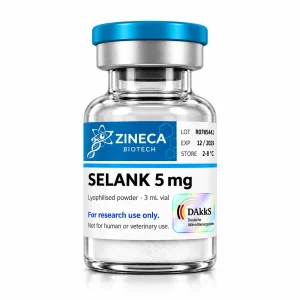
Selank 5mg
Selank 5mg
Selank is a synthetic neuropeptide analogue supplied in lyophilised powder format for laboratory and analytical research applications. Derived from the endogenous peptide tuftsin, Selank is commonly utilised within controlled research environments investigating neuropeptide signalling, neuroimmune interactions and central nervous system regulatory pathways.
This peptide is widely studied in biochemical and cellular research systems examining neurotransmitter-associated signalling, stress-response pathways and peptide-mediated communication mechanisms under controlled laboratory conditions.
Product Details
- Product Name: Selank
- Synonyms: Thr–Lys–Pro–Arg–Pro–Gly–Pro
- CAS Number: 129954-34-3
- Molecular Formula: C33H57N11O9
- Molecular Weight: ~751.9 g/mol
- Peptide Length: 7 amino acids
- Peptide Type: Synthetic neuropeptide analogue
- Purity: ≥ 99% HPLC typical
- Appearance: White to off-white lyophilised powder
- Pack Size: 5mg
- Storage: Desiccated, protected from light, stored at –20°C or below
- Solubility: Soluble in water and buffered aqueous solutions
Description & Research Context
Selank is a synthetic heptapeptide developed from the endogenous immunomodulatory peptide tuftsin and modified to enhance peptide stability for experimental investigation. In laboratory research environments, it is commonly utilised to study neuropeptide-mediated signalling pathways and neuroimmune communication mechanisms.
Experimental research systems have examined Selank for its influence on neuronal signalling pathways, including neurotransmitter-associated signalling cascades and stress-response mechanisms. Studies commonly investigate peptide–receptor interactions, intracellular signalling, neuroimmune regulation and gene-expression responses under controlled laboratory conditions.
Observed molecular responses may vary depending on peptide concentration, exposure duration, neuronal model and experimental system design.
Applications in Research
- Study of neuropeptide-mediated signalling pathways
- Investigation of neuroimmune interactions and CNS regulatory mechanisms
- In vitro and in vivo analysis of peptide stability and signalling behaviour
- Research into neurotransmitter-associated signalling systems
- Use as a reference compound in neurobiology and peptide-signalling research
Handling, Reconstitution & Stability
- Weigh under dry laboratory conditions, as peptides may be hygroscopic
- Reconstitute using sterile water or suitable buffered aqueous solutions
- Avoid vigorous agitation during dissolution
- Filter sterilise if required prior to laboratory use
- Aliquot and store reconstituted solutions at –20°C or lower
- Avoid repeated freeze-thaw cycles
Precautions & Notes
Experimental behaviour of Selank may vary depending on neuronal model, receptor expression, peptide concentration and exposure duration. Buffer composition, pH and ionic strength may influence peptide stability and assay performance during laboratory procedures.
Appropriate laboratory controls are recommended to distinguish peptide-specific signalling activity from non-specific experimental effects.
Research Use Only
This product is supplied strictly for laboratory, analytical and scientific research purposes only. It is not intended for human consumption, veterinary use, therapeutic use, diagnostic use, medical use, cosmetic use, food use or recreational use.